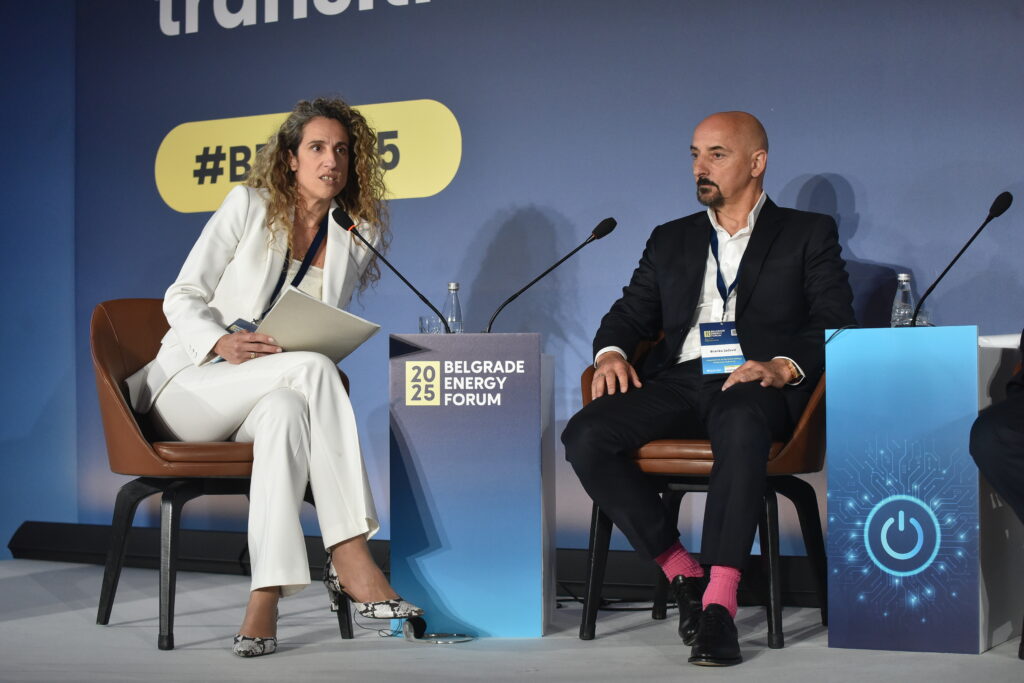
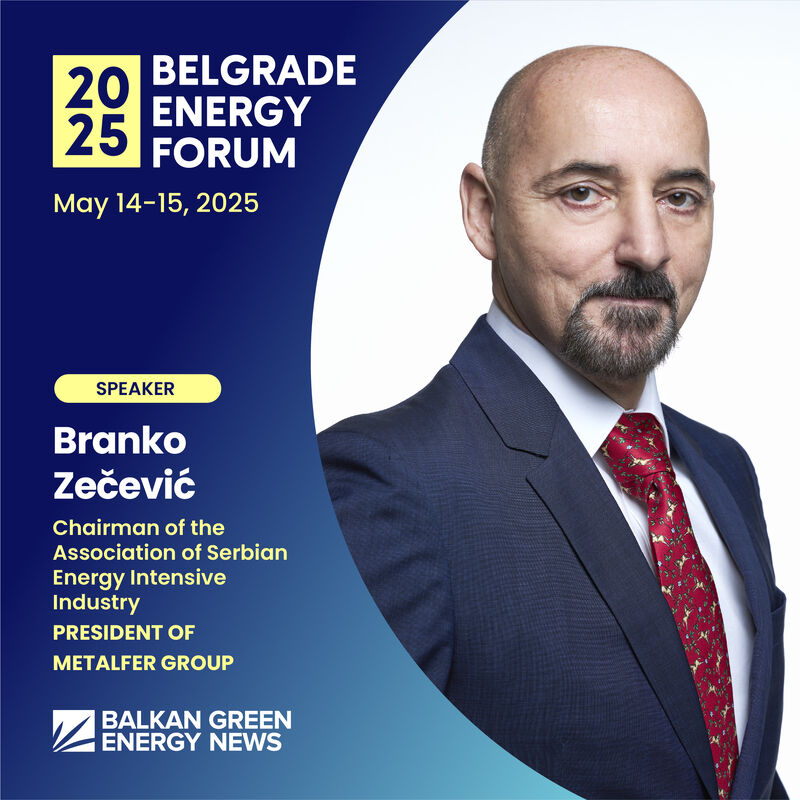
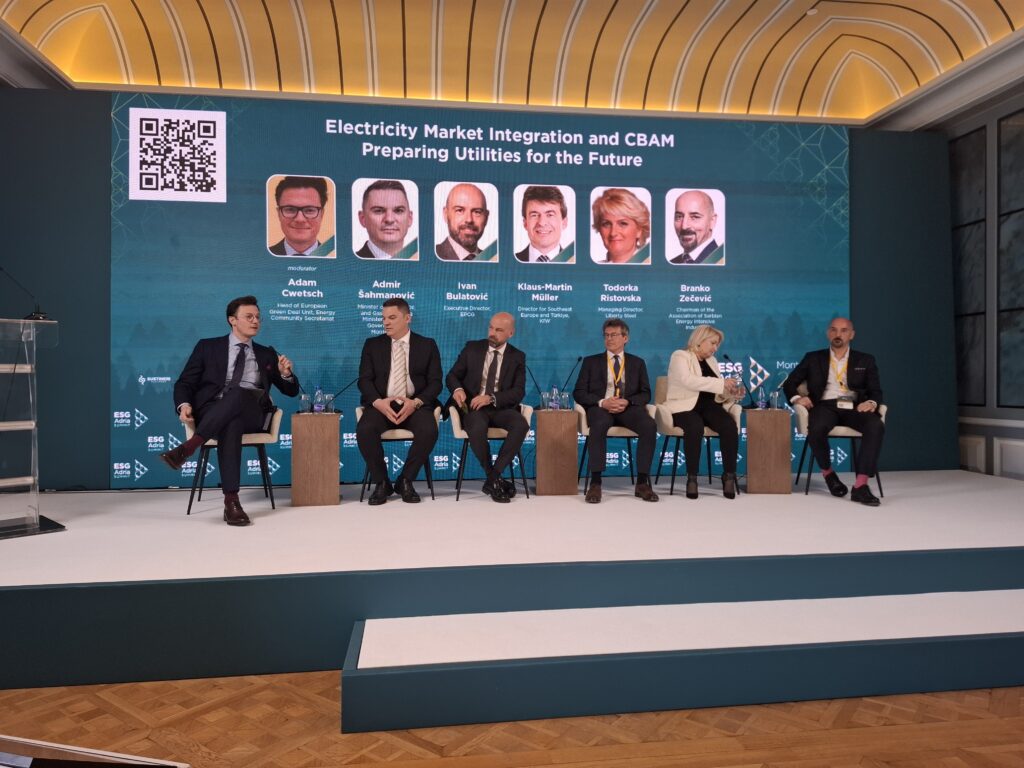
The President of Metalfer Group, Branko Zečević, took part in the panel discussion “Climate and Trade Policy – Is the Region Ready for CBAM?”, held within the Core Days 2025 conference, organized by NALED, with the support of the Government of Sweden and in cooperation with the Partnership for a Competitive Region.
The conference brought together more than 300 participants from the region and the European Union—representatives of governments, local authorities, industry, and civil society—with the aim of exchanging experiences in the implementation of ESG standards and preparing the economy for new climate and trade mechanisms, including the introduction of a national carbon tax and the full implementation of the CBAM regulation.
The conference brought together more than 300 participants from the region and the European Union—representatives of governments, local authorities, industry, and civil society—with the aim of exchanging experiences in the implementation of ESG standards and preparing the economy for new climate and trade mechanisms, including the introduction of a national carbon tax and the full implementation of the CBAM regulation.

In his address, Branko Zečević emphasized that Metalfer Group has for years been making strategic investments in the modernization and decarbonization of its production, with more than EUR 120 million invested in new technologies, energy-efficient facilities, and emissions reduction. However, he underlined that the transition toward a low-carbon industry must be accompanied by adequate protection of the domestic and regional markets.
“Not all companies, nor all countries, will have the capacity to implement decarbonization at the same pace. In such circumstances, some producers reduce prices and become unfair competition to those investing in new technologies and emissions reduction. If we allow a fully open market to absorb products that have not undergone the transition, all investments in decarbonization will be called into question,” Zečević stated.
He also pointed to the broader global context, noting that the concept of completely free trade de facto no longer exists, as almost all major economies are introducing various forms of protection for their domestic industries in the process of energy and climate transition. In this regard, he warned that products from countries not covered by the CBAM mechanism will seek new, unprotected markets, among which the Serbian market could be included.
The panel also addressed the issue of aligning national regulations with European policies. Representatives of the Ministry of Energy emphasized that Serbia has, over the past period, worked intensively with the European Commission to ensure that national emissions taxation mechanisms are recognized as compatible with EU frameworks, taking into account the structure of the energy sector and the high share of electricity generation from coal.
During the discussion, the importance of retaining a portion of CBAM revenues within the country was also highlighted, through the establishment of a dedicated decarbonization fund aimed directly at industry and investments in clean technologies. This approach was recognized as a key prerequisite for preserving the competitiveness of the domestic economy on the European market.
Metalfer Group’s participation in the Core Days 2025 conference clearly confirms the company’s active role in the dialogue on climate transition, the strategic policy of energy-intensive industries, and CBAM regulation, as well as its commitment to ensuring that the decarbonization process is conducted responsibly, strategically, and within a clear regulatory framework that guarantees a level playing field.
He also pointed to the broader global context, noting that the concept of completely free trade de facto no longer exists, as almost all major economies are introducing various forms of protection for their domestic industries in the process of energy and climate transition. In this regard, he warned that products from countries not covered by the CBAM mechanism will seek new, unprotected markets, among which the Serbian market could be included.
The panel also addressed the issue of aligning national regulations with European policies. Representatives of the Ministry of Energy emphasized that Serbia has, over the past period, worked intensively with the European Commission to ensure that national emissions taxation mechanisms are recognized as compatible with EU frameworks, taking into account the structure of the energy sector and the high share of electricity generation from coal.
During the discussion, the importance of retaining a portion of CBAM revenues within the country was also highlighted, through the establishment of a dedicated decarbonization fund aimed directly at industry and investments in clean technologies. This approach was recognized as a key prerequisite for preserving the competitiveness of the domestic economy on the European market.
Metalfer Group’s participation in the Core Days 2025 conference clearly confirms the company’s active role in the dialogue on climate transition, the strategic policy of energy-intensive industries, and CBAM regulation, as well as its commitment to ensuring that the decarbonization process is conducted responsibly, strategically, and within a clear regulatory framework that guarantees a level playing field.